Best Describes the Composition of a Nucleotide
They contain purine or pyrimidine base. The nitrogenous base is the central information carrying part of the nucleotide structure.

Dna Vs Rna 5 Key Differences And Comparison Technology Networks
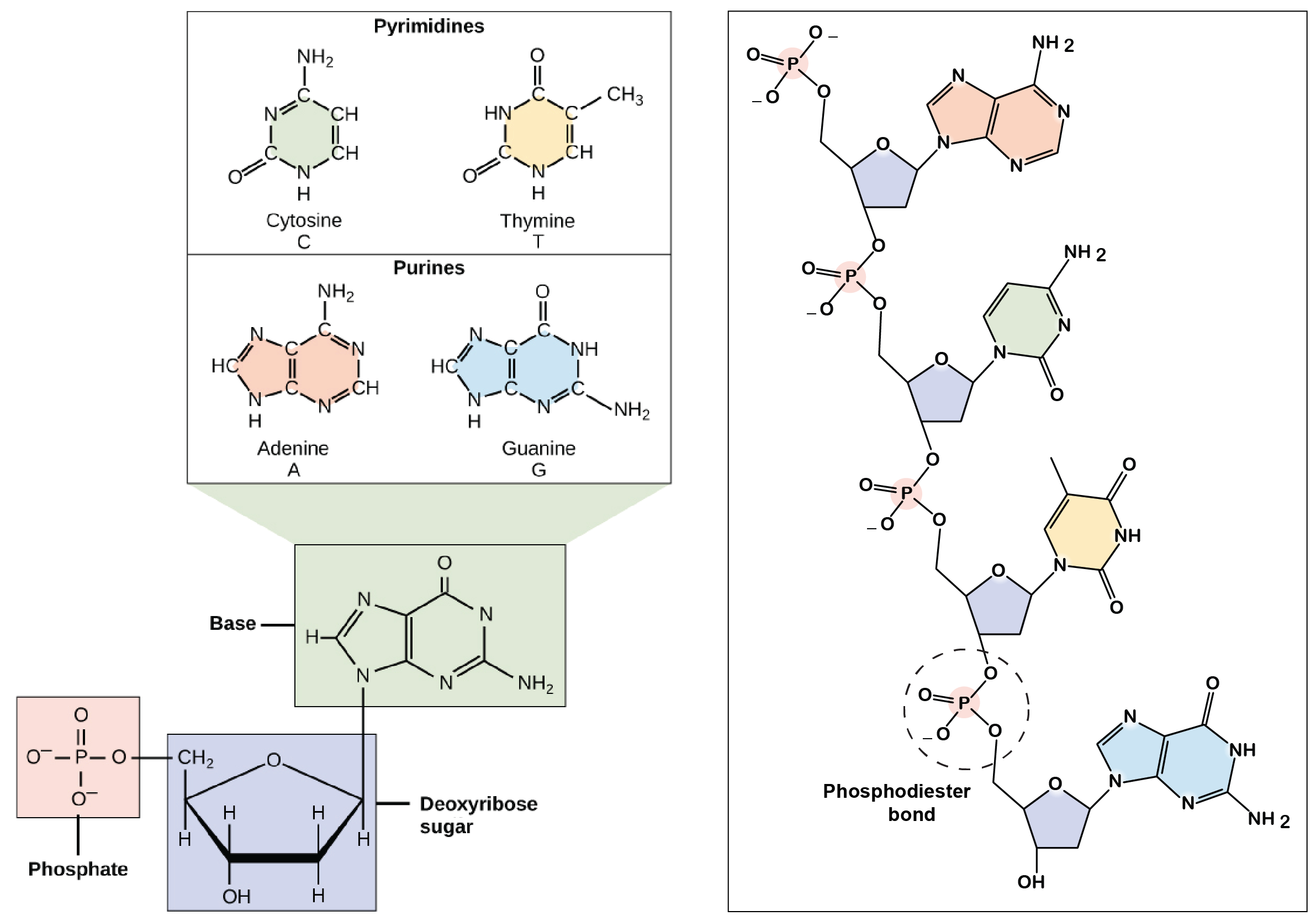
The nucleotides of the polymer are linked by phosphodiester bonds connecting through the oxygen on the 5 carbon of one to the oxygen on the 3 carbon of another.
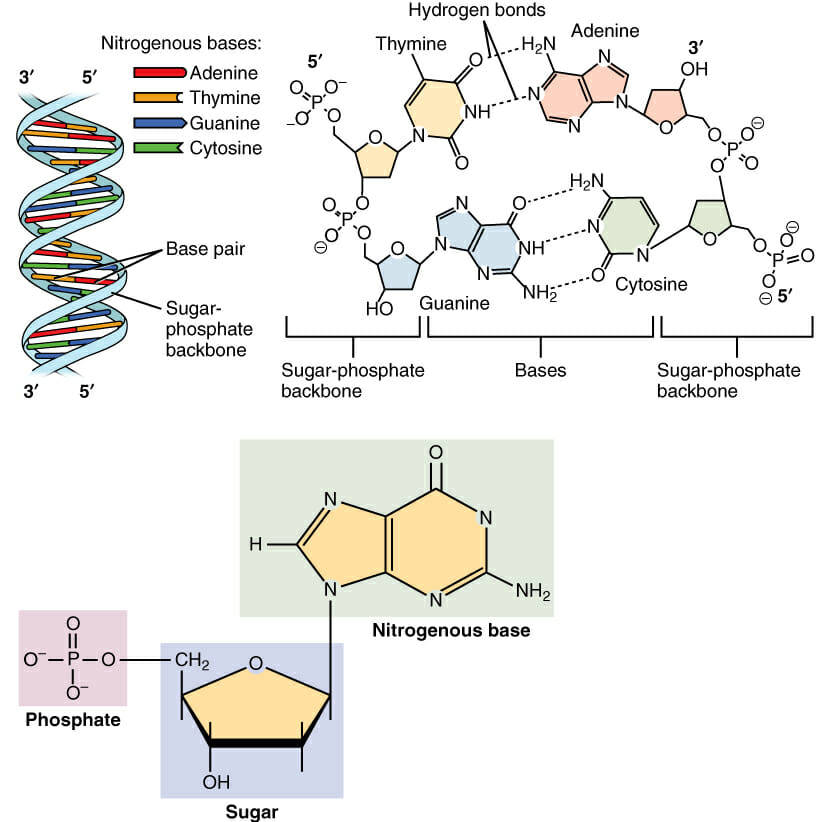
. A nucleotide consists of a nitrogenous base a pentose sugar and a phosphate group. View the full answer. A nucleotide is what occurs before RNA and DNA while the nucleoside occurs before the nucleotide itself.
Which best describes the structure of a nucleotide. A nucleotide is the basic building block of the nucleic acids like DNA and RNA. Be notified when an answer is posted.
Nucleotide Structure Nitrogenous base. A nucleotide contains a pentose sugar. Adenosine triphosphate known as ATP is the ideal example of a nucleotide.
The last part of. Which of the following best describes the chemical composition of a nucleotide. The main difference lies in their molecular composition as Nucleosides contain only sugar and a base whereas Nucleotides contain sugar base and a phosphate group as well.
DNA contains adenine A guanine G thymine T and. A base phosphate and carbohydrate A phosphate and sugar A base and a sugar A base. In DNA deoxyribose pentose sugar is present whereas in RNA ribose sugar is present.
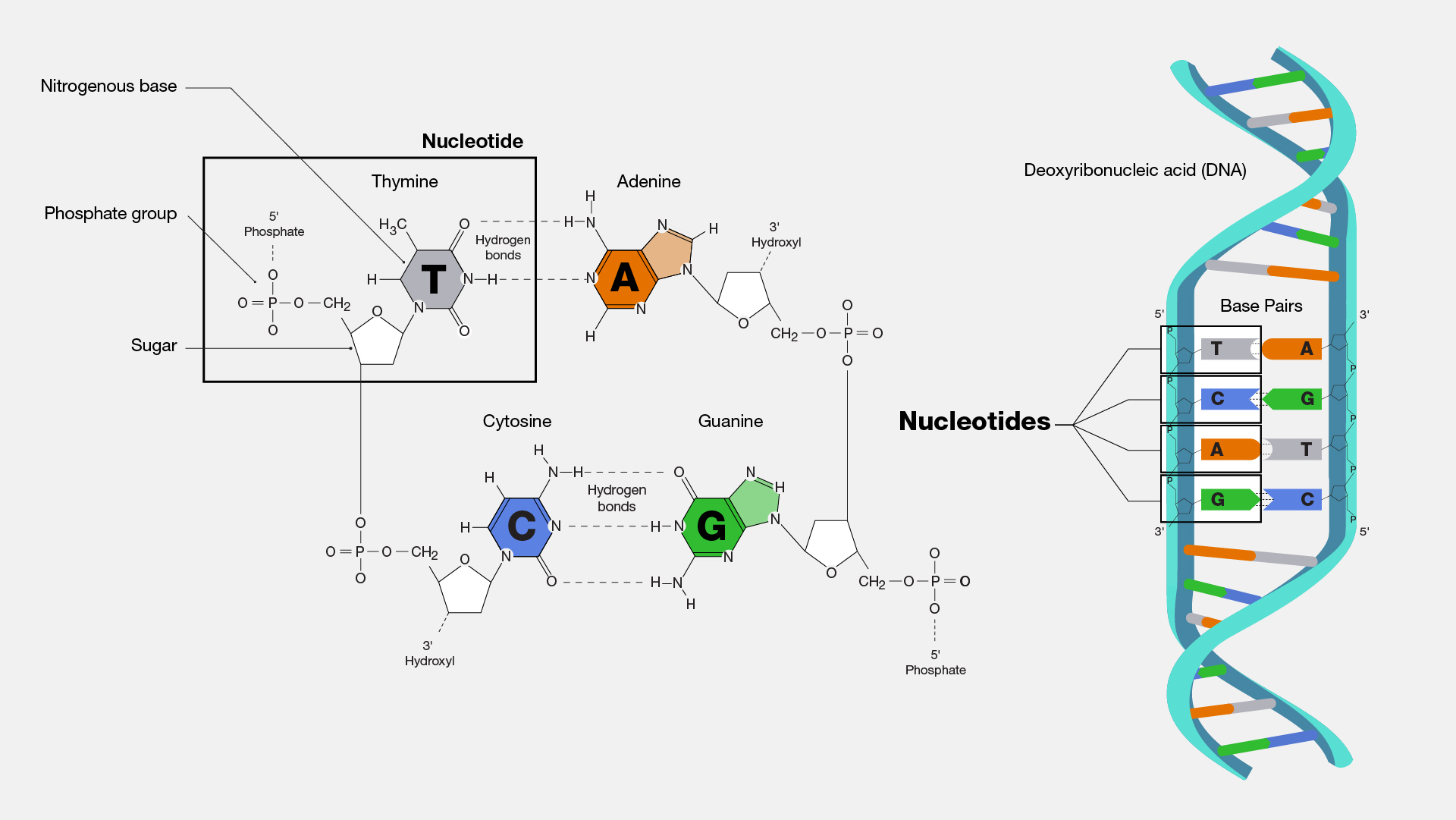
The chemical assembly of the three parts of the nucleotide the phosphate blue box nitrogenous base red box and the pentose sugar. A pair of six-carbon rings attached to each other B. It contains three phosphate groups a ribose sugar and adenine as base.
A nucleobase a five-carbon sugar ribose or deoxyribose and a phosphate group consisting of one to three phosphates. Want this question answered. 2 allows the nucleotide to.
Adenine - thymine. A five-carbon sugar attached to a phosphate group. Nucleotide A sequence of three nucleotides which codes for an amino acid.
These relationships are summarized in Table 7-1 and the corresponding chemical formulas are shown in Figure 7-3. A carbon atom joined to hydrogen and three. Hydrogen The process by which mRNA is used to transport information from DNA to the cytoplasm.
15 Which of the following bestdescribes the composition of a nucleotide. Though nucleoside monophosphates found in nucleic acids actually nucleoside triphosphates are the raw materials for their synthesis. A carbon atom joined to hydrogen and three functional groups C.
Nucleotides are composed of three subunit molecules. DNA deoxyribonucleic acid possesses three components namely sugars phosphates and nitrogen bases in its structure. Updated on January 24 2020 Nucleotides are the building blocks of the DNA and RNA used as genetic material.
A nucleotide consists of base sugar and phosphate group. Cyclic Nucleotides Act as Regulatory Chemicals. Regardless of the nucleotide the sugar is always the same.
Cyclic AMP cAMP functions as second messengers in many hormone actions while cyclic GMP cGMP. A fi ve-carbon sugar attached to a phosphate group and a nitrogenous base. A chain of carbon atoms with a carboxyl group bonded to one end D.
Nucleotides are made out of elements like nitrogen and carbon with a nitrogenous base a five-carbon sugar component and a group of phosphates. The Oxygen and Nitrogen atoms in the backbone give DNA and RNA polarity. The bases used in DNA are adenine A cytosine C guanine G and thymine T.
Transcription May either be adenine guanine cytosine uracil or thymine. Nucleotides are the basic units of nucleic acids DNA and RNA. The phosphoric acid component of each nucleotide is of course chemically identical in both nucleic acids.
What best describes a nucleotide structure. It is known as the energy currency of the cell. Phosphate is attached to the.
The bases in the two strands interact through complementary base pairs formation which correspond to A-T adenine-thymine and G-C guanine-cytosine. A nucleotide is the basic building block of nucleic acids RNA and DNA. It not only provides energy to various metabolic processes but also captures energy released in different reactions.
The sequence or order of the nucleotides defines the primary structure of DNA and RNA. Which of the following best describes the composition of a nucleotide. The four nucleobases in DNA are guanine adenine cytosine and.
Nucleotides also are used for cell signaling and to transport energy throughout cells. A nitrogen-containing base a phosphate and a pentose sugar In this figure showing DNA replication what does E represent. This particular nucleotide is adenine.
ID209049 D Common EQ. However there are some important differences between RNA nucleotides and DNA nucleotides. Each nucleotide contains a nitrogenous base a five.
The components of nucleotides are a nitrogenous base a phosphat. Nucleotides are organic molecules that serve as the basic structural monomer units for DNA and RNA which as we know are the building blocks responsible for all life on Earth. The second portion of the nucleotide is the sugar.
The assembly of nucleotides 1 differentiates them from nucleosides which do not contain a phosphate group in the blue box. Base sugar ring and phosphate - 3566592. Nitrogenous bases are the complex heterocyclic ring structure which includes adenine guanine cytosine and thymine bases in DNA and uracil is present instead of thymine in RNA.
Codon The bonds that hold base pairs together. And a nitrogenous base. DNA Deoxyribonucleic acid contains deoxyribose sugar and RNA.
The nitrogenous bases come in one of two different forms they are either a pyrimidine or a purine. Which of the following best describes the composition of a nucleotide. A nucleotide consists of a sugar molecule either ribose in RNA or deoxyribose in DNA attached to a phosphate group and a nitrogen-containing base.
By Anne Marie Helmenstine PhD.
Nucleotide Definition Structure 3 Parts Examples Function

Create A Concept Map Of Biomolecules Concept Map Biology Activity Graphic Organizers
6mkr Ylt8imdtm
Discovery Of The Structure Of Dna Article Khan Academy
0 Response to "Best Describes the Composition of a Nucleotide"
Post a Comment